You have spotted a crack above a door frame, or a fine line running along the cornice, and the only real question is whether it matters. Most of that answer is in where the crack sits and what shape it is, and you can read it yourself in a couple of minutes.
Behind nearly all of them is the ground. South west Sydney sits on a lot of reactive clay, which swells when it is wet and shrinks when it dries, and a slab sitting on it moves with it. That movement has to go somewhere, and in a modern house it goes into the plasterboard, because plasterboard is the cheapest and most forgiving thing in the wall.
A fine line along a joint is cosmetic
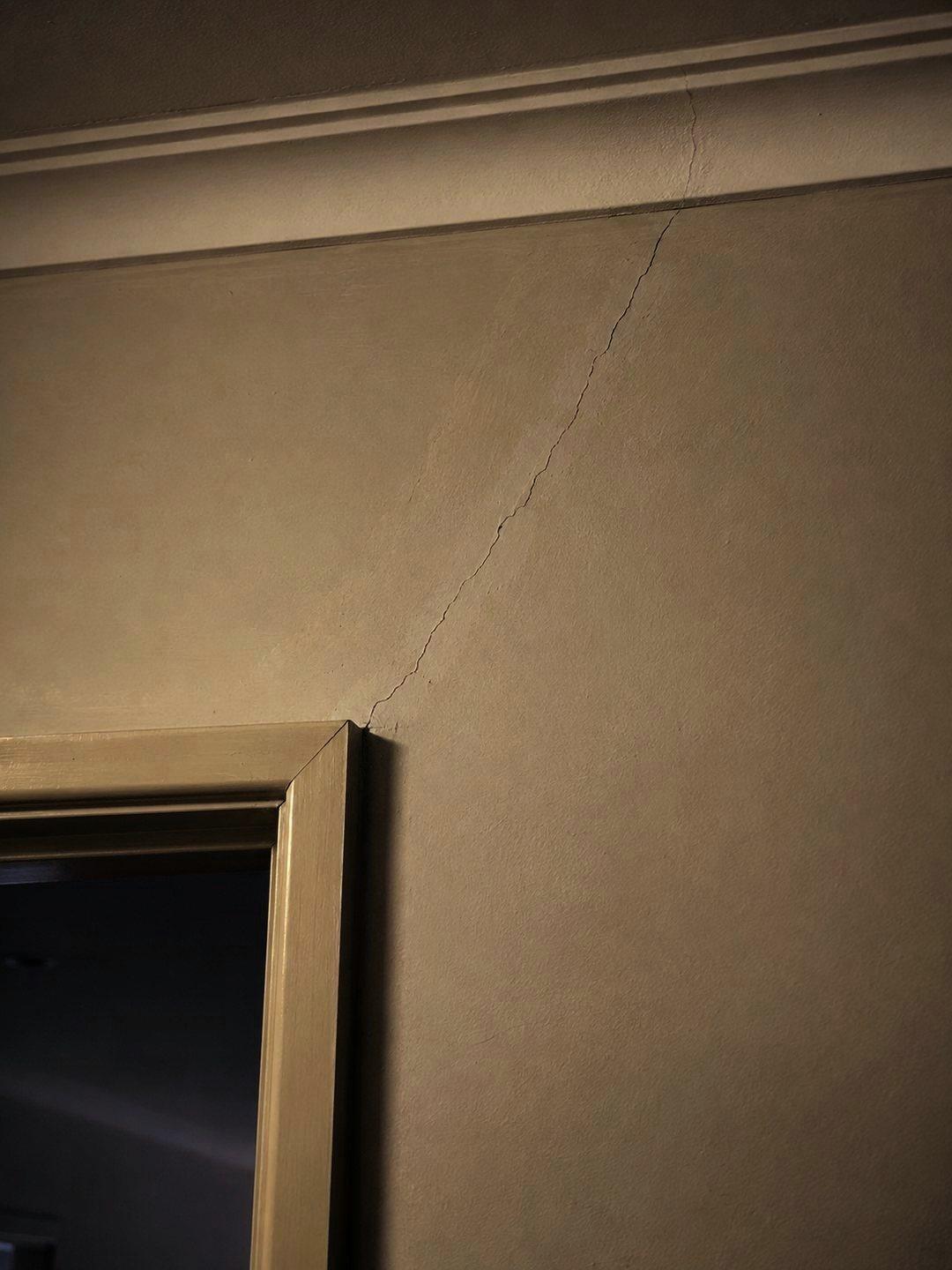
Cracks that run dead straight, usually above a door, along a cornice or down a wall, are almost always a sheet joint opening slightly. The paper tape in the joint has let go, or it was never properly bedded. They open a little in a dry summer and close again in a wet winter.
If you would rather not chase it yourself, this is exactly what our gyprock crack and hole repairs are for.
The fix is to cut the crack open enough to get material into it, re-tape with a proper joint tape, set it in coats and sand it flat. Run a tube of filler along it and paint over the top and you are back where you started inside a year, because nothing has been done about the joint underneath.
Stair step cracks in brick are a different problem
A crack that runs diagonally through the mortar joints in a stair step pattern, on an external brick wall, is the structure moving rather than the lining. So is a crack that is wider at one end than the other, or one you can get a five cent coin into. Get a structural engineer onto those before anyone touches the plaster inside.
We will patch the internal lining once the movement is understood. We will not patch it and tell you it is fixed, because it will come back.
A crack that keeps returning in exactly the same place is telling you something. Cracks that move around are settlement. Cracks that come back identically are structural or a moisture problem.
Cracks off the corner of a door or window are normal
Openings concentrate stress, so a short diagonal crack running up from the corner of a frame is extremely common. It is most common in the first two years of a new build, while the frame dries out and the slab settles. These usually stabilise. Patch it once, and if the same crack is back within a year it is worth a closer look.
A sagging ceiling is the one to act on
A ceiling sheet sags when the fixings holding it to the joists let go, or when it has taken water and lost its strength. Ceilings do not come down gradually, they come down all at once, so this is the one you do not sit on. What to look for:
- A visible dip or wave when you look along the ceiling from a doorway.
- Cornice separating from the ceiling on one side but not the wall.
- A stain or a soft spot, which means water.
- Nail or screw heads popping through the paint in a line.
Do not patch a sagging ceiling. It gets propped, the cause gets found, and then the sheet either gets re-fixed or comes down and goes back up.
Why a patch that does not show takes more than one visit
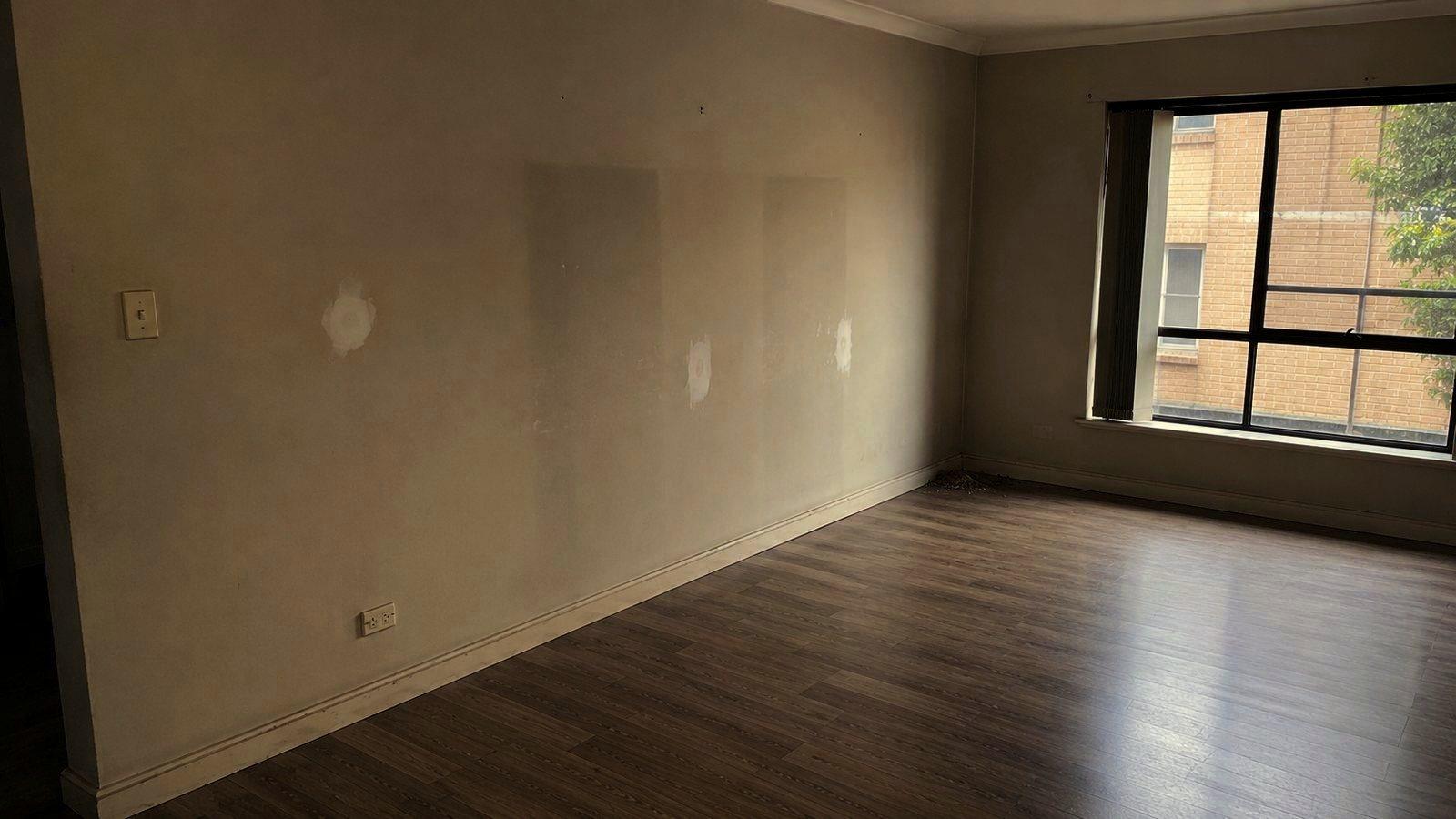
Cut the damage back to a square with clean edges, ideally landing on a stud or joist so the new piece has something to fix to. Fix the new board rather than gluing it into the hole. Tape and set the joints in three coats, sanding between them, and let every coat dry. Then paint the whole wall or the whole ceiling, not just the patch, because sheen changes where paint overlaps and a spot repair always shows in raking light.
If somebody patches, sands and paints a hole in one visit, you will see the patch. That is not carelessness, it is that setting compound needs time.