
Plastering and Gyprock repairs in Sydney
Gyprock patched, ceilings sheeted and set, cornice run and mitred. The trade where the finish is the whole job.
Quotes are free, in writing / 7am to 5pm
The three kinds of plaster damage, and what each one needs
Holes, cracks and water damage in plasterboard
A door handle through a wall, a crack that opens every summer, a ceiling that has gone soft under a leak. A patch is easy to do badly. Done properly the repair is invisible under paint, and done badly you can see the square from the doorway for the rest of the time you own the house.
- Damaged sheet cut back to the studs or joists
- New board fixed, not just glued into the hole
- Joints taped, set in coats, which means the joint is filled in three thin passes with drying time between them, and sanded flat
- Left ready for paint, and the dust cleaned up
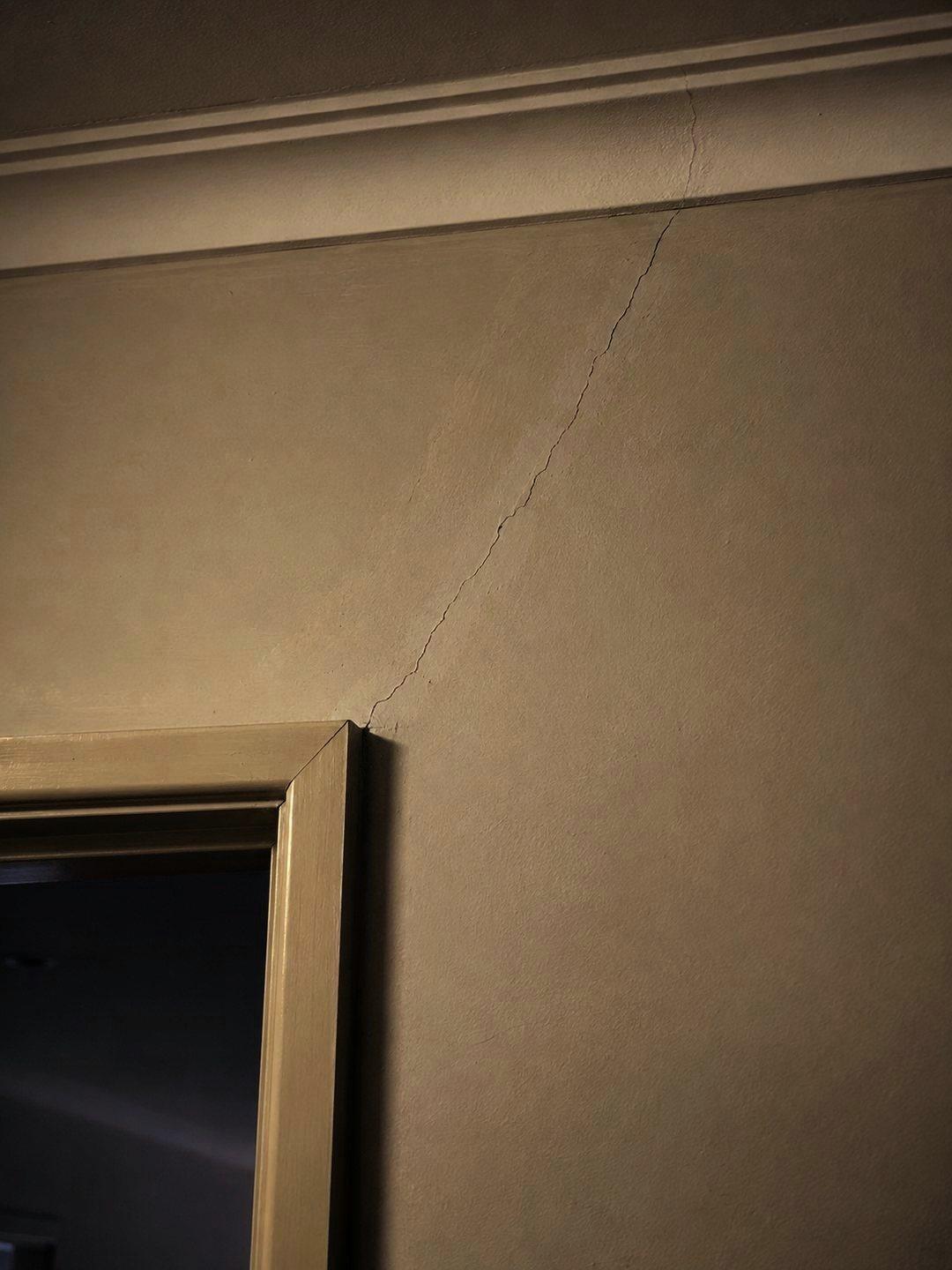 A hairline crack tracking up from a door corner
New sheeting, whole ceilings and walls
New sheeting on a ceiling or a wall is a two person lift and a three coat finish. We use Gyprock and Knauf board, wet area sheet where it belongs, and we set the joints in coats rather than trying to fill everything in one go.
- Gyprock or Knauf board, wet area sheet in bathrooms and laundries
- Sheets fixed to the frame at the right centres
- Joints set in three coats and sanded between them
- Corners finished with a metal bead so they hold up to being knocked
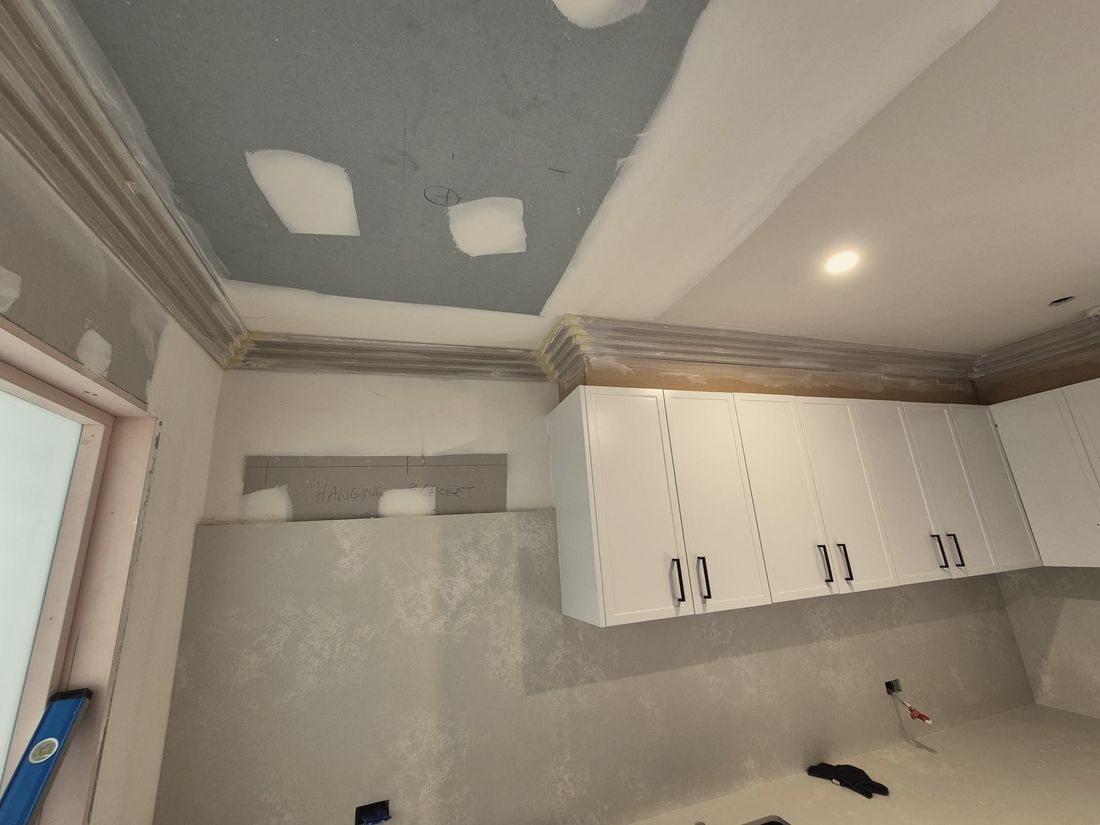 A ceiling patched and set on a live job
Cornice, and why the corners give it away
Cornice is the one place a plasterer cannot hide. An internal mitre either closes or it does not. It is also the fastest way to make a patched ceiling look like it was always that way, which is why we run it after the sheeting rather than before.
- Cornice matched to the existing profile through the house
- Internal and external mitres cut on site and closed properly
- Run around bulkheads, manholes and new joinery
- Set, sanded and left ready for paint
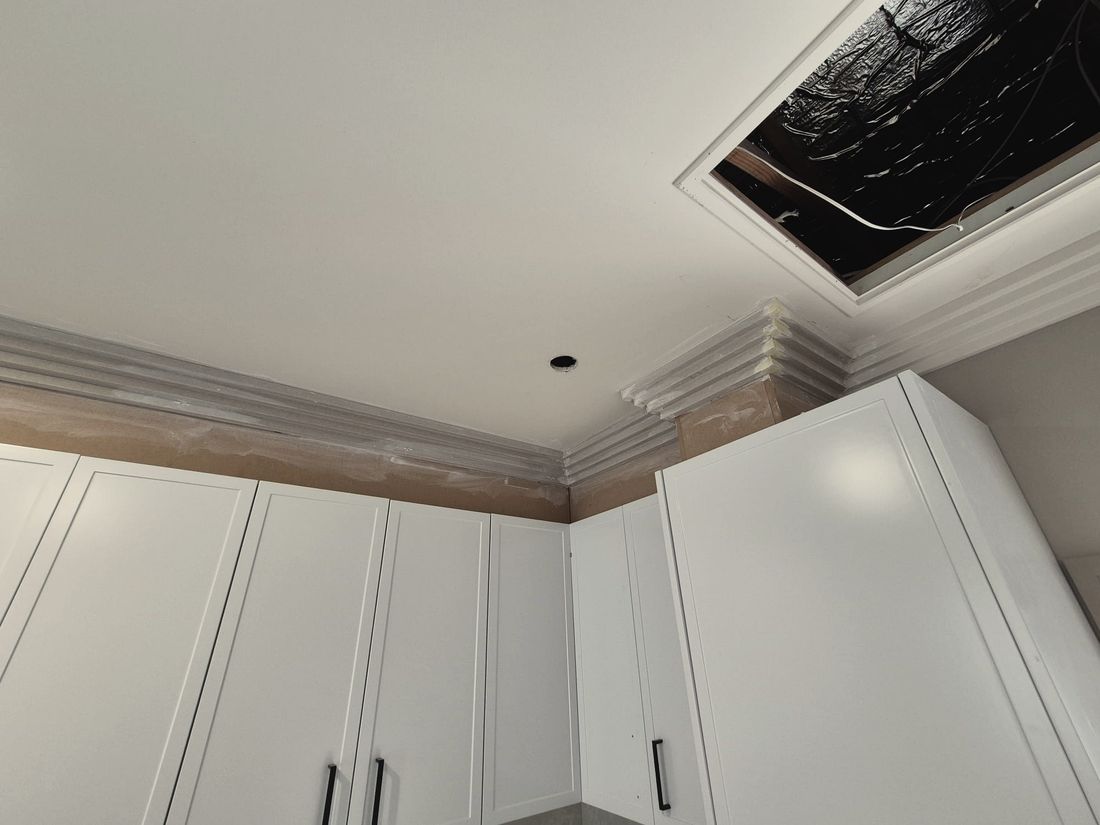 Cornice run against finished joinery
Four steps, and two visits
Photograph the damage
A wide shot and a close one. Both, because scale is hard to judge.
We quote the repair
Patch, sheet or the whole ceiling. We will say which it needs.
We sheet and set
Fixed, taped and set in coats, with sanding between them.
Ready for paint
Left flat, dusted down, and you or we paint it.
Plaster and cornice work we have finished
Real photographs from our own jobs: patched ceilings, cornice runs and the corner detail.
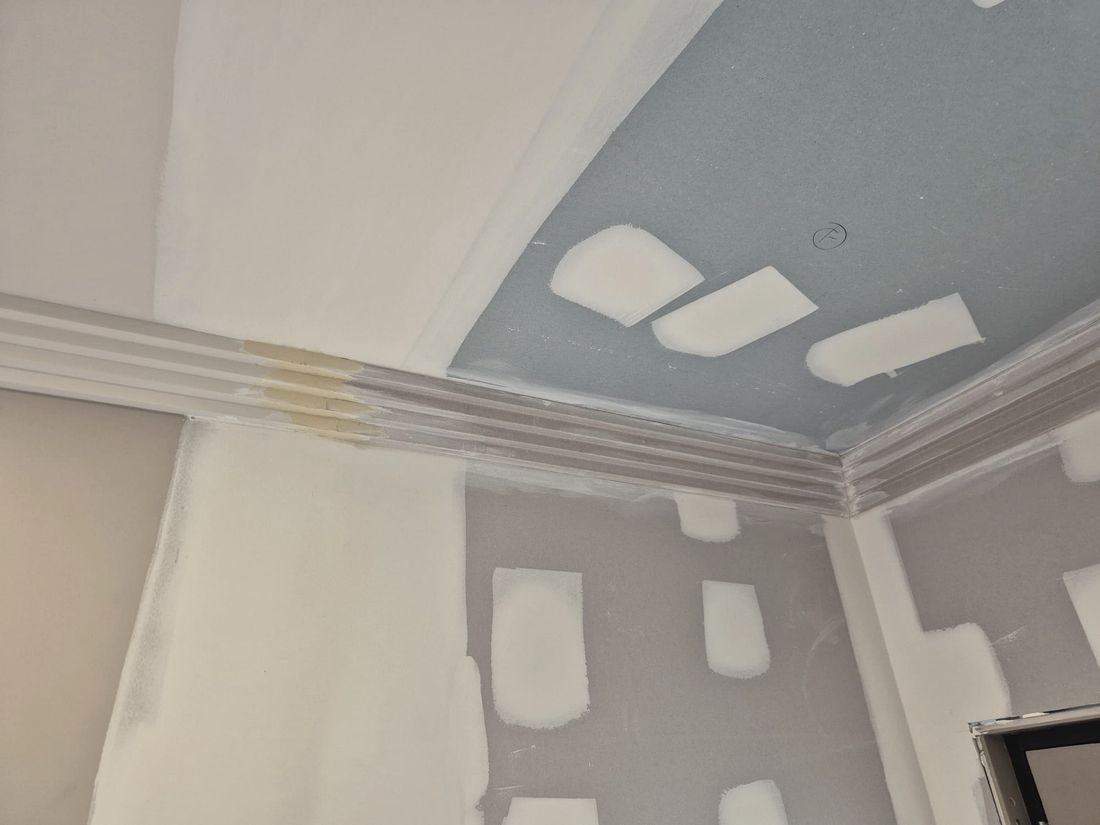
A cornice corner, cut and set on one of our jobs, tape still on
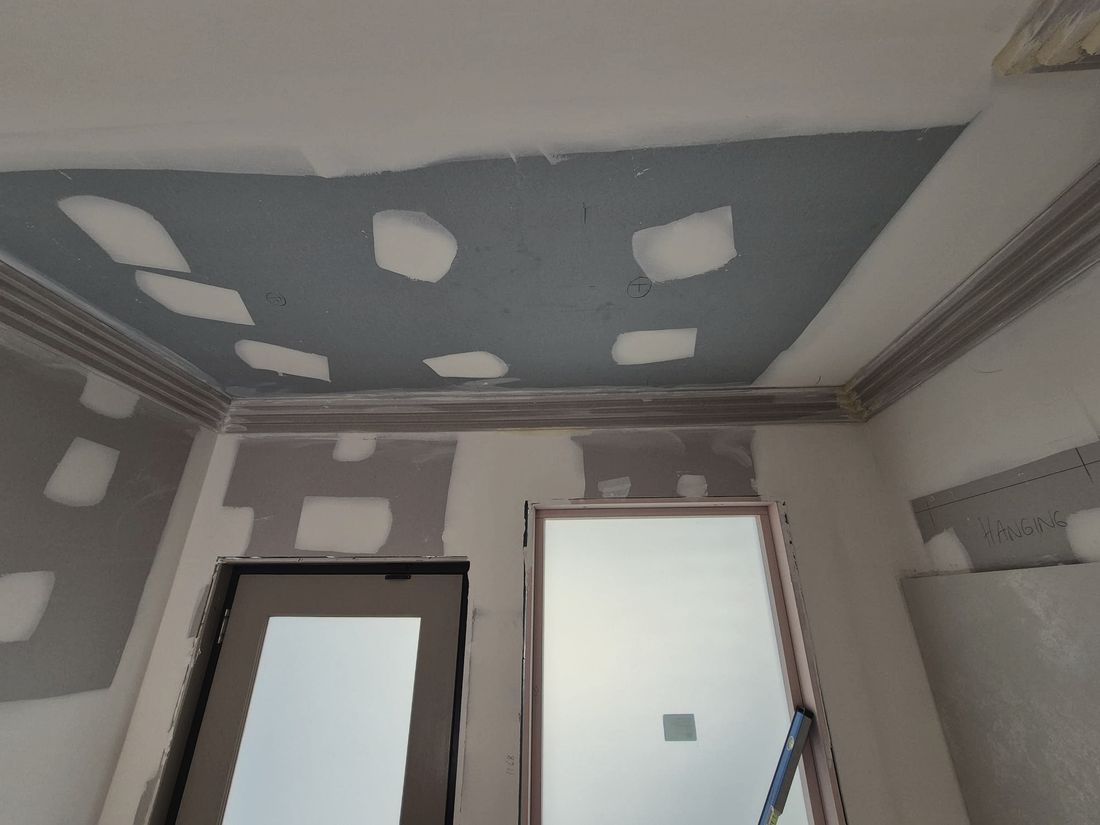 Ceiling and walls patched and coated, cornice run
Cornice run against finished joinery
Ceiling and walls patched and coated, cornice run
Cornice run against finished joinery
The jobs a builder will not take are the jobs we are built for.
- The small jobs are the whole business. A door, a fence panel, a list of five things. That is the work we are set up for, not the leftovers between big jobs.
- You get the price before we start. Quotes are free and in writing, itemised, valid 30 days, and the quote says what is not included. Nothing is due on labour up front, and you can cancel at no cost before materials are ordered.
- We say no when it is not our job. A sagging ceiling that has let go at the fixings is not a patch, and we will tell you that rather than push a repair that will not hold. Electrical, plumbing and gasfitting are licensed trades, and we refer waterproofing out as well.
- Up to 5 years on our workmanship. 5 years on what we build new, 3 years on repairs to what was already there. On top of your rights under the Australian Consumer Law, which no warranty can take away.
What people ask about plastering
A patch is usually two visits. Set coats need to dry properly before the next one goes on, so a hole patched and sanded on the same afternoon will show through the paint later. We will tell you which day we are back before we start.
Not if it is set and sanded properly and the wall gets a full coat rather than a spot of paint. A patched square painted only in the middle will always show, because paint sheen changes where it overlaps.
Gyprock and Knauf, and wet area sheet in bathrooms, laundries and anywhere else it belongs. We will name the board on the quote so you know what is going on your wall.
In most cases yes. Common cove profiles are still made and easy to match. An older or decorative profile may not be, and where that happens we will show you the closest available option before anything is cut.
Probably not. A sagging ceiling is usually the fixings letting go or water getting in, and patching it treats the symptom. We will get up and look, and if the sheet needs to come down we will tell you rather than push a repair that will not hold.
Send a photo. Get a straight answer.
Most jobs can be priced from two or three photos, so you do not have to wait around for someone to come and look at a door.
Or just ring
0451 110 154Get your free quote today!
Got it, thanks.
We will come back to you with a price or a question. If it is urgent, ring 0451 110 154 rather than waiting.
Other things we get asked to do on the same visit
Most of the cost of a small repair is getting there, so anything else on this list can go on the same quote and the same day.
More on this: what a crack in your plasterboard actually means.