Somewhere in the last few months your door started catching. First you had to push it. Then you had to lift it. Now it does not latch at all unless you lean on it, and you have started leaving it open. It is a small thing that gets irritating four times a day.
The door, the hinges, the jamb, the strike plate and the floor all have to line up. Only one of those five is the door itself, and it is the least likely one to have moved. Two minutes of looking tells you which it is, and saves you buying a new door you do not need.
Most of it is a twenty minute fix with a long screw. Past that it becomes door and window repairs, or a carpentry job to rehang the door properly.
The gap tells you which part has moved
Close the door slowly and watch the gap right the way around. You are looking for where the gap closes up first. If you cannot see it, run a sheet of paper down the gap until it jams. There are only five answers:
- It rubs at the top of the latch side. The door has dropped, which means the top hinge is pulling out of the frame.
- It rubs at the bottom of the latch side. The door is tilting the other way, or the floor has lifted.
- It rubs along the hinge side. The hinges are packed too far out, or paint has built up in the rebate.
- It closes but will not latch. The strike plate and the latch are no longer lined up.
- It rubs on the floor across the whole width. The floor covering changed, or the door has swollen.
The top hinge is nearly always the culprit
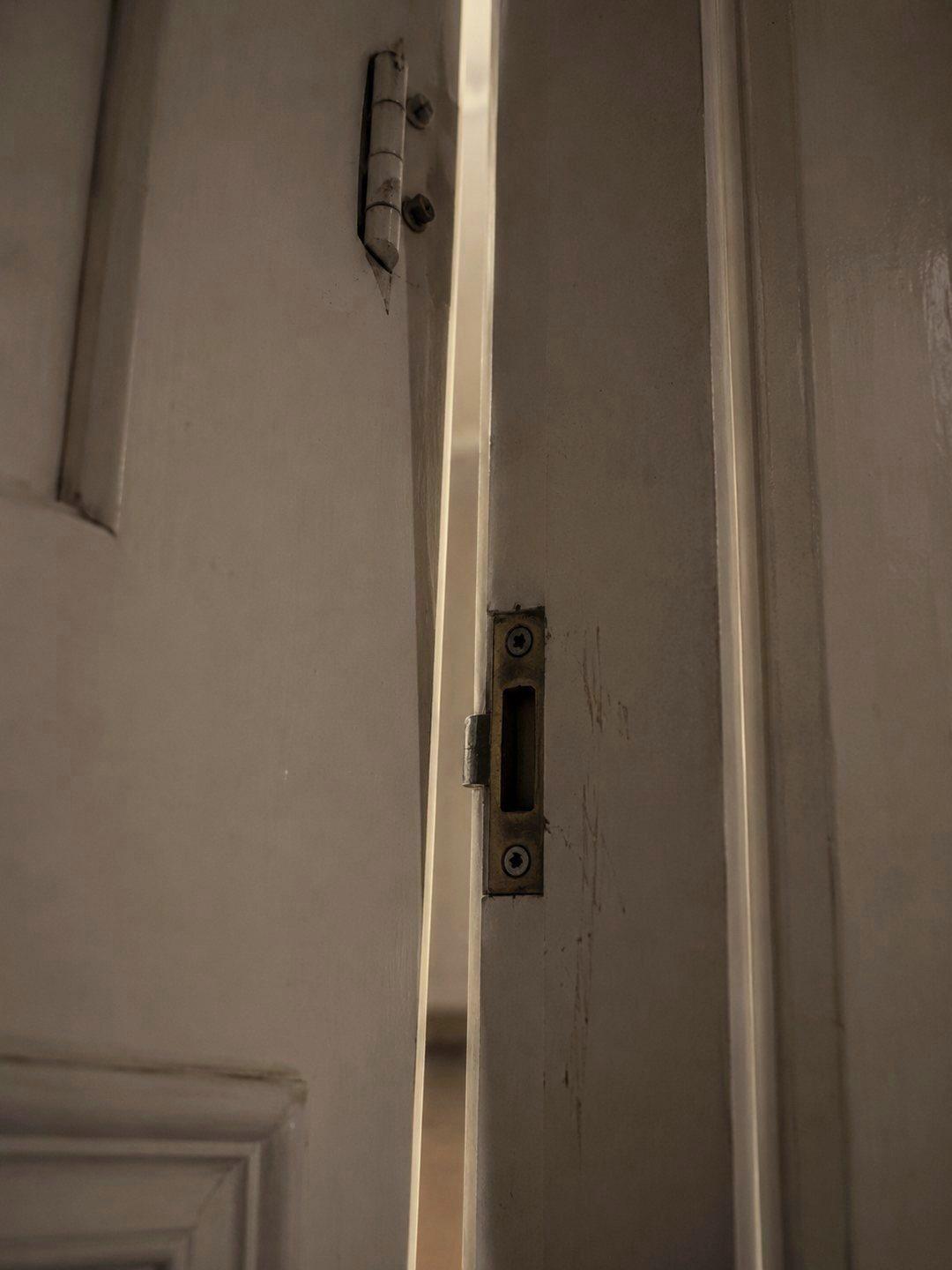
A door hangs off three screws in a top hinge. Those screws go into the door jamb, and the jamb is often only a thin piece of timber packed off the stud behind it. Years of the door being pushed, hung on and slammed pull that top hinge forward, the door tilts, and the top corner on the latch side starts catching the frame.
The fix is not a new door. It is longer screws. Take one screw out of the top hinge on the frame side and replace it with a 65mm or 75mm screw that reaches past the jamb and bites into the stud behind. Do the same with the next one. Nine times out of ten the door lifts back into line as you drive them home.
If the screw holes have chewed out and the new screw just spins, the hole needs filling before it will hold. Glued hardwood plugs or matchsticks and PVA, left overnight, then re-drilled.
If it closes but will not catch, look at the strike plate
Hold a torch at the gap while someone closes the door and watch where the latch bolt lands relative to the hole. Usually it is a couple of millimetres high or low. You can file the strike plate hole, which is fast and works, or you can move the plate, which is neater and means filling the old screw holes first.
Do not fix it by winding the strike plate deeper into the frame. That drags the door out of line with its own stop, and you end up with a door that latches and rattles.
A door that binds every February has not failed
Timber doors move with humidity. One that sticks through a Sydney summer and swings free again in July is doing exactly what timber does. Sealing the top and bottom edges, which is where most doors are left bare, slows the moisture getting in and reduces the swing. It is the single most skipped step when a door gets hung.
Some doors are genuinely past adjusting
Hollow core doors that have taken water delaminate at the bottom rail, and no amount of adjusting fixes a door that has come apart. External doors left unsealed on the bottom edge for a decade go the same way. If the door flexes when you push the middle, or the veneer has bubbled, it is time for a new one.
How we fix it so it stays fixed
- Check the hinges first and re-fix them into the stud where they have pulled.
- Re-align or move the strike plate so the latch catches on the first push.
- Plane and seal the leading edge only if the geometry is right and it still binds.
- Replace worn hinges, closers and handles rather than adjusting worn parts.
- Seal the top and bottom edges before we leave, because that is what stops it coming back.
Most doors are done inside an hour. If you have three or four around the house, that is one visit rather than three, and it is the sensible way to book it.