Before you price a retile, work out whether the tiles are even the problem. Grout is the sacrificial part of a tiled floor. It is softer than the tile, it is porous, and it takes all the movement, so it is meant to fail first. The question is never whether the grout has gone. It is whether anything behind it has gone with it. If the grout is just one part of a bathroom that feels tired all over, start with what you can update without renovating.
Tap the floor and listen, it takes two minutes
Take a coin or the handle of a screwdriver and tap your way slowly across the tiled floor. A tile still bedded down gives a dull, solid knock. A tile that has let go from the bed underneath gives a hollow, drummy rattle, and you will hear the difference the moment you cross onto it.
If the answer turns out to be the grout rather than the tiles, shower regrouting is usually a one day job.
- Solid across the whole floor: regrouting is the right job. The tiles are fine, the grout has just worn out.
- A few drummy tiles in one spot: those tiles get lifted and re-bedded, then the floor gets regrouted.
- Drummy across a large area: the bed has failed. Regrouting buys you months, not years.
Regrouting a floor whose bed has let go is the most common way people waste money on a bathroom. The grout cracks again along the same lines within a season, because the movement that broke it the first time has not gone anywhere.
The corners are where the water gets in
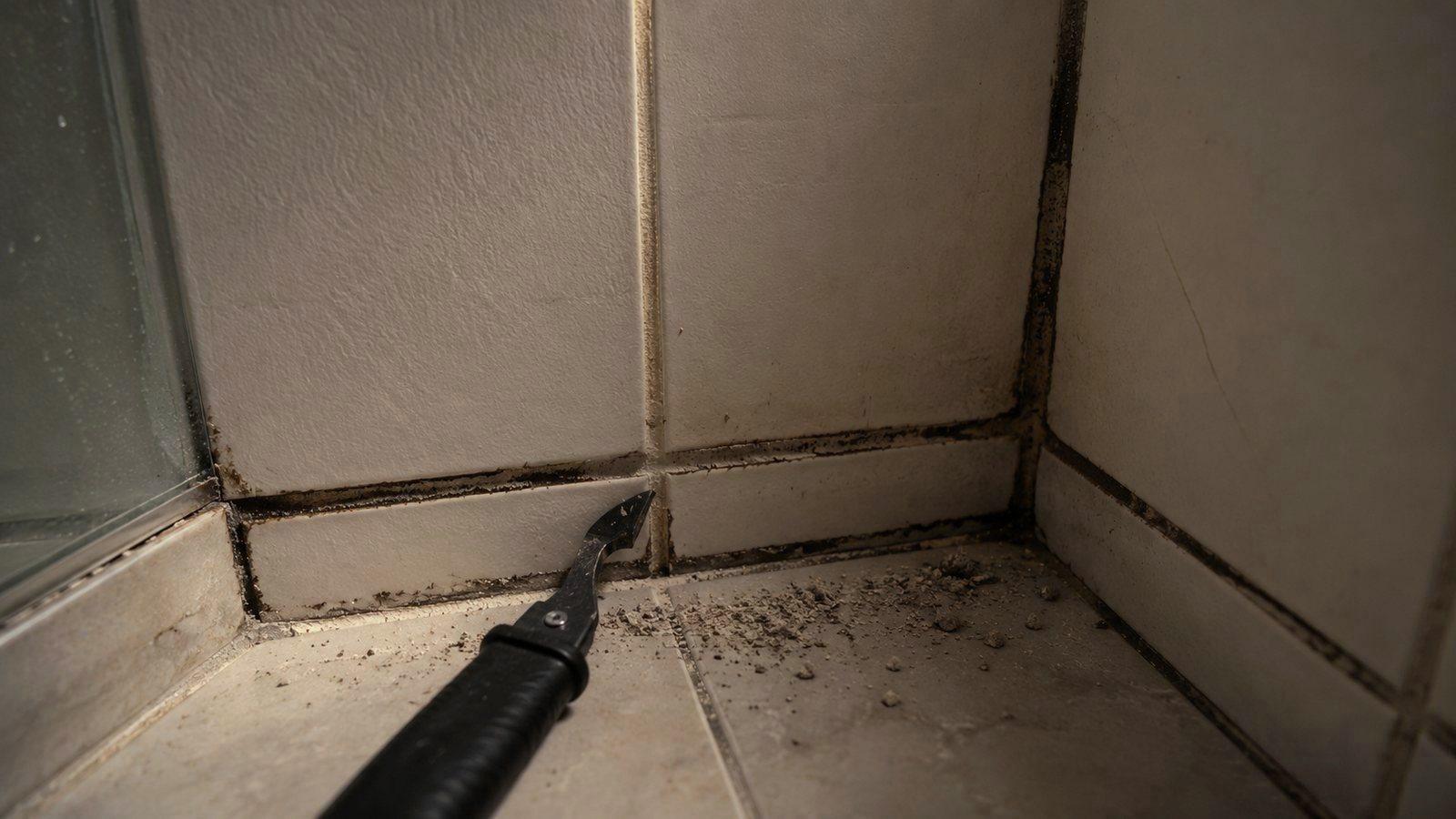
Look at the internal corners: wall to wall, wall to floor, and around the shower screen. Those junctions are meant to be silicone, not grout. They are the spots where two surfaces move independently of each other, and grout is brittle, so it cracks there first. If someone has grouted your internal corners, that is a fault, not a finish.
Once a corner has cracked, water goes behind rather than down the drain. In a shower that means it is sitting against the waterproof membrane. A good membrane will hold it for years. A bad one, or a wall sheet that was never wet area board, will not.
Signs the problem is behind the tile
- A musty smell in the room that does not clear with the window open.
- Paint bubbling or plaster going soft on the other side of the shower wall.
- Skirting lifting in the hallway next to the bathroom.
- A stain on the ceiling below an upstairs bathroom.
- Tiles that sound drummy in a line rather than in a patch, which often tracks a leak.
If you have any of those, regrouting is not the job. The membrane needs looking at, and waterproofing a wet area is licensed work in NSW. Anyone who offers to regrout over that is selling you a delay.
What a proper regrout looks like
Grout raked out to a decent depth, not skimmed over. Old silicone cut out completely, because new silicone will not bond to old. Floor cleaned and dried. New grout worked in and the joints tooled. Then silicone into every internal junction once the grout has set, not at the same time.
Allow a day for a normal bathroom and stay off the floor overnight. Anyone who does it in two hours has skimmed the old grout, and you will watch it come away in strips inside a year.
The things grout will never fix
Regrouting will not make a dated bathroom look new. It makes a tired one look maintained. If the tiles themselves are cracked, the floor falls the wrong way, or the shower does not drain, those are set out problems and no amount of grout touches them.
Selling in six months, or staying ten years?
If you are selling in six months, regrouting and resiliconing is the highest value maintenance you can do to a bathroom. If you are staying ten years and you already hate the tiles, spending on grout is spending twice.